CSDS POLICY BRIEF • 7/2026
By Patrick Wouters
25.3.2026
Key issues
- Modern warfare requires a layered, integrated defence of both high-end weapon systems and low-cost mass-produced counter-drone technologies;
- The effectiveness of drone warfare today relies on quantity, rapid innovation and adaptability rather than just technological complexity;
- Establishing strategic autonomy through homegrown production and resilient supply chains is now a critical national and European security imperative.
Introduction
In a recent interview on CNN, Jacquelyn Schneider, Director of the Stanford Hoover Wargaming and Crisis Simulation Initiative, opined that the United States’ (US) campaign in Iran is a test of the “American Way of War”. Precision Strike technology and effects-based operations arguably “coerce” an adversary to give up in the first days of a war before boots-on-the-ground are required. Using Artificial Intelligence (AI) and other disruptive technologies would enable the US to control territory at a distance and effect regime change, or at least regime compliance, as in the Venezuelan case. For a long time, US allies, the Europeans, the Taiwanese, the South Koreans and the Japanese have been trying to emulate these technologies, whereas it may – in Schneider’s opinion – be more appropriate to invest in technologies that ‘increase the pain of an invasion’. While mines and counter-drone systems can still bring complexity in their operational use and fielding, they would be cheaper, applied in mass and platform-agnostic (read: less tied to big industrial defence contractors).
This CSDS Policy Brief will argue that, while these technologies should not be considered a substitute for high-end sophisticated weapon systems, they should be part of the layered integrated mix of defensive systems and be deployed promptly to be effective in protecting the forces engaged in an operation. To fully comprehend the strategic and political implications of drone warfare, it is imperative to understand the military-technical complexities of these systems. The strategic and operational complexities of drone warfare are subsequently considered in light of recent conflicts, leading to policy recommendations on the matter.
The military-technical complexities
As in the “David vs. Goliath” saga, overconfidence in the supremacy of high-end weapon systems paired with oblivion to the strengths of low-end armaments can lead to ill-advised operational priorities. The military-technical aspects of industrial production, fielding, tactics and training for the massive use of “Uncrewed Vehicles” and counter-drone warfare require a thorough understanding of the most modern technologies involved.
First of all, it should be clear that a drone (otherwise known as an Uncrewed Aerial Vehicle – UAV) is merely one component of so-called Uncrewed Aircraft Systems (UAS), which also include the ground control station, the communication links by radio or satellite and the (often AI-driven-) software. In the case of a one-way-killer drone – such as the Shahed – the communication with the ground control station occurs only at pre-launch during the targeting phase. The fact that two-way communication is not required during its flight obviously avoids one possible vulnerability of the system, but it also means that a re-targeting option is not available to the operator.
Similarly, Uncrewed Maritime Vehicles (UMS) and their parent systems can be remotely piloted or fully autonomous systems, generally involving AI (which introduces yet another ethical complexity). In any case, countering drones (C-UAS/C-UMS) starts with detecting their presence and – ideally – identifying them. Typically, this entails detection by radar, Radio Frequency (RF) communication signals between the drone and its operator, Electro-Optical/Infrared (EO/IR) cameras and heat sensors or acoustic sensors that “listen” for the sound frequencies of drone motors (sonar in the case of UMS).
Depending on the type of drone, neutralising it will entail different techniques, either by electronic jamming, kinetic interception (i.e. physically destroying the drone) or by “frying” its electronics through so-called “direct energy”. The first method aims at disrupting satellite navigation signals, whereby the drone loses its bearings. However, given that modern drones can use more than one navigation signal (either the US-GPS, the Russian GLONASS, the Chinese Beidou or the European Galileo), jamming them requires multispectral and directed energy capacities.
Steering commands are often given through First Person View (FPV) goggles or by updating navigation and targeting coordinates during flight. A second method of achieving “soft-kills” aims at disrupting RF steering signals, causing the drone to land, hover or return to its starting point. To guard against jamming, smart operators will use “frequency hopping” or fibre-optic wiring to elude the jamming, as recent battlefield developments in Ukraine have demonstrated. Alternatively, access to global “internet” providers such as Starlink or Amazon LEO can also carry direction and targeting signals or further complicate their obstruction (as the Russian navy experienced to its detriment in the Black Sea).
Conversely, kinetic interception will focus on nets, projectiles or even “interceptor” drones, which use AI-assisted guidance to counter electronic warfare (EW). Once a human operator locks onto a target, the drone uses an onboard image-processing chip to track the target’s shape autonomously, even if the radio link is jammed. Finally, directing high-energy lasers or high-power microwaves at the drone can also achieve a so-called “hard kill”, as will be explained later.
The strategic and operational complexities of drone warfare
It is undeniable that drone warfare has fundamentally influenced recent conflicts. Drones with a global reach – such as the Global Hawk and the Predator – have altered military strategy in geopolitically significant ways, even to the point where a compelling case can be made that lethal drone deployment as a counterterrorism tool and instrument of statecraft in targeted states engenders far-reaching consequences for US grand strategy. In the Afghan and Iraq wars, for example, they provided actionable intelligence and targeting information, as well as overwatch during active engagements. In the case of the armed MQ9 Predator, it provided ground-directed close air support and even “in extremis support” when troops got into tight spots.
However, this prompted President Obama to make significant reforms to the policies and procedures that had governed the use of lethal drones for so-called targeted strikes in non-battlefield settings (namely Yemen, Pakistan and Somalia). Unsurprisingly, these strict targeting rules that required “near certainty” that a target was present and that no civilians would be harmed were loosened during the first Trump administration and replaced with more flexible, region‑specific rules. While maintaining a double vetting system by the Central Intelligence Agency (CIA) and the Department of War (DoW), Trump delegated more authority to the military and CIA field commanders, expanded the areas of active hostilities and imminent threat and – crucially – reduced transparency requirements for public reporting.
Lessons from drone warfare in the Ukraine-Russia conflict
One of the first lessons learned during massive Russian artillery barrages is that drones dramatically improve target acquisition, enabling artillery to strike faster and more accurately, but also that enemy drones enabled the rapid, or even pre-emptive, detection of artillery and armour movements. The operational implication is that every unit – artillery and infantry – becomes a drone unit.
The Merops System
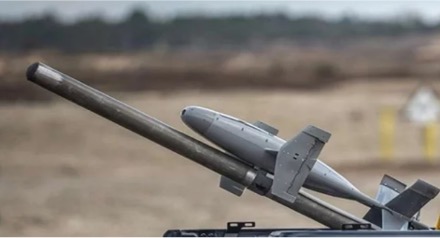
Image credit: Associated Press, 2025
On the one hand, Ukraine demonstrated that it can organise complex, coordinated long-range drone operations. Prime examples were the attacks of maritime drones against ships and submarines in the Black Sea and operation “Spiderweb”, which struck dozens of Russian high-value aircraft after emerging from a truck. Notably, these novel long-range uses of drones were likely contingent on the availability of Starlink. On the other hand, Russia has also demonstrated its capacity for mass production and low‑cost innovation. Based on the Iranian Shahed 136, for example, the Russians developed the Geran-3 (with a jet engine) and Geran-5 (longer range, higher payload), allowing swarms, decoys and multi‑vector attacks to overwhelm traditional defences.
These innovations also show why rapid technological adaptation is a battlefield necessity and should be supported by continuous closed-loop innovation cycles, supported by the industrial defence establishment, however small the companies involved.
Leading up to the Iran conflict
‘Ukraine helps partners who help our security and the protection of our people’s lives, [but our] assistance in countering Iranian drones will be provided only if it does not weaken Ukraine’s own defences, and if it adds leverage to Kyiv’s diplomatic efforts to stop the Russian invasion’. The irony of President Zelensky’s chivalrous response to an urgent US request for equipment to be provided, along with Ukrainian experts, to defend against Iranian drones in the Middle East, shall not be lost on the world’s public opinion.
Ukraine has, indeed, domestically developed a range of systems of low-cost, short-range FPV interceptors, which operate as part of an integrated air defence system, including radars and AI to identify, track and lock on to targets. Examples here are the “Sting”, a bullet-shaped high-speed quadcopter featuring thermal imaging, built by Wild Hornets at an approximate unit cost of US$2,100, or the P1 SUN, a 3D-printed modular frame that uses fibre-optics to bypass jamming, which is built by Skyfall at an approximate unit cost of US$ 1,000.
And then there is Merops, a kinetic interceptor developed through a joint Ukraine-US venture called Project Eagle at an approximate unit cost of US$ 15,000. For detection, a modular array of sensors, including radar and electro-optical/infrared (EO/IR) cameras, is used to spot small, low-flying drones (as opposed to classic air defence radars designed for aircraft, cruise or ballistic missiles). Once a target is identified, the Merops system launches a high-speed, fixed-wing drone called ‘Surveyor’, which uses AI-powered chips to track and ram the enemy drone (or detonate a small proximity warhead). A key operational feature is that it fits on a standard pickup truck or small vessel, allowing it to be moved quickly to protect bodies of water, airbases or other infrastructure, as well as borders or moving convoys.
It should be noted that Merops, while very effective within its design envelope, is not a “one-size-fits-all” solution against all attack drones. To obtain a layered defence similar to the Israeli “Iron Dome”, it should be complemented at the high end by a multi-sensor system, such as “Drome Dome” or “Locust”, which can use laser energy to defend against swarms of drones. Alternatively, the “Coyote” system, designed by Raytheon, uses a high-powered microwave pulse to “zap” entire swarms at once without exploding.
Operation “Epic Fury”
Operation Epic Fury began on 28 February 2026 with attacks on Iran’s command-and-control infrastructure, including the headquarters of the Supreme Leader, naval and missile infrastructure and known nuclear development sites. The immediate retaliation by Iran concentrated on coordinated waves of drones and missiles aimed at harbours, airports and oil facilities in Israel and the Gulf states, as well as regional US infrastructures. In an apparent effort to draw in as many nations as possible, Iran fired volleys of Shahed drones at Azerbaijan, as well as ballistic missiles towards Diego Garcia and across Syria in the direction of Turkey (and the rest of Europe). While these ballistic missiles were successfully intercepted by Arleigh Burke destroyers under NATO command in the Eastern Mediterranean, the message was clearly meant to deter any European direct or indirect support to Israel and the US in the conflict.
Overall, during the first 12 days of the conflict, the air defences of Gulf states reported in excess of 300 missiles and 2,300 drones, with an overall intercept rate of around 90%. Besides Saudi Arabia, Bahrain, Qatar and Oman, the United Arab Emirates and Kuwait sustained the heaviest attacks. While the successful US intercept rate was reportedly even higher, the economic cost of the use of American high-end missiles expanded (e.g. THAAD, SM3/6 and PAC-3), and the damage to US and allied military installations was likely severely underestimated by the Trump administration. Reliable sources, such as CSIS and the Congressional Research Service, have reported that in the first 96 hours of the conflict, the US fired over 5,000 munitions, which consumed roughly 30-40% of the US THAAD and Patriot PAC-3 stockpiles, necessitating a $50 billion emergency supplemental budget request that was not originally planned for.
To better understand the strategic and political implications of a layered integrated air defence ecosystem, the table below provides an overview of the primary tactical use, economic cost (per fire unit and per shot) and the (current) depth of US inventories.
| System |
Platform Type |
Unit Cost
Cost/shot
(US $)(*) |
Primary Role |
Units in US Inventory
Status (Mar 2026) (**) |
| THAAD |
Battery + SAM |
$1,500,000,000
$15,000,000 |
High Altitude Ballistic Missile Defence |
8 Bie – 500-550 Msl
Deployed in the Middle East |
| Patriot (PAC-3)
SM3 (***) |
Surface-to-Air Missile |
$1,100,000,000
$4,200 |
Medium Altitude Ballistic Missile Defence |
15 Bie – 1600 PAC-3
90 ships – 414 SM3
Deployed in the Middle East |
Coyote
(Block 2) |
Jet-Powered Drone |
$2,000,000
$120,000 |
High-speed drone intercept |
Cost of Fire unit only
1,200 – Strategic reserve |
| Locust
(Lucas) |
Laser Weapon |
$8,000,000
$3 |
Point defence vs. drone swarms |
15-20 – Deployed vs. Mexican Cartel Drug Ops |
| Drone Dome |
Detection
Jamming |
$3,000,000
$0 |
Sit. Awareness
and Soft Kill |
12-14 – Domestic (FIFA ’26) & Overseas |
| Merops Surveyor |
Fixed-Wing Interceptor |
$15,000
$15,000 |
Long-range patrol drone ramming |
10,000 – Mass-deployed in the Middle East |
| Bumblebee V2 |
FPV Quadcopter |
$5,000
$5,000 |
Point defence and “dogfighting” |
2,000 – Initial deliveries |
(*) The listed costs include a full battery + basic load of missiles
(**) The number of units depicted is current before Operation Epic Fury, but subject to rapid expenditure. The number of batteries/systems pertains to the entire US inventory as of March 2026, an unknown number of which are deployed in the Middle East.
(***) The Standard Missile SM-3 is similar to the Patriot PAC-3 and is fired from US Navy AEGIS Cruisers, such as the Arleigh Burke and Ticonderoga classes. Depending on the Block, its cost per missile is between US$ 12,000,000 and US$ 36,000,000.
During the first days of Operation Epic Fury, the integrated air defence – and the counter-drone defences in particular – failed to prevent the destruction of a US$ 1.1 billion AN/FPS-132 early warning radar in Qatar and at least two US$ 500 million AN/TPY-2 (THAAD) radar components, as well as the loss of six American service members at Camp Arifjan in Kuwait. Unfortunately, it is only in the ensuing days that the US Army started deploying 10,000 Merops counter-drone systems to intercept Iranian Shahed-type attack drones threatening US forces and regional infrastructure at a lower cost and designed to defeat mass drone raids without expending high-value Patriot and THAAD interceptors. However, its late deployment, combined with an apparent lack of operator tactics and training, points to the hitherto unheeded lessons that Ukraine has learned the hard way in the past years.
Indeed, Ukraine offered a Shahed Drone Defence Plan more than 6 months before the start of Operation Epic Fury, but the US rejected it at the time, preferring to rely on established (but expensive) American-made systems like the Coyote. The US only revisited the offer after ‘Trump administration officials told lawmakers during a closed-door briefing on Capitol Hill […] that Iran’s Shahed attack drones represent a major challenge and US air defenses will not be able to intercept them all’. Hence, there should be no doubt that the challenge of swarms of Shaheds, as well as the threat of maritime drones, is a major factor in the battle for the Strait of Hormuz; a threat, until a cease-fire is reached, that will have to be dealt with before safe commercial shipping can be resumed.
Conclusions
Arguably, the geopolitical, economic and policy aspects of the massive use of “Uncrewed Vehicles” and counter-drone warfare have been underestimated in recent conflicts. Today, quantity clearly beats complexity in an environment where drones are cheap and adaptable. On the tactical level, it has become evident that air defences must be layered to include high‑cost interceptors (for nations that can afford them) as well as scalable, low‑cost drones and counter-drone systems, both in the air and in maritime environments; and, in the more distant future, on land. Alternatively, shooting at the archer rather than at the arrows might be a more cost-effective tactic, but one that requires time-sensitive targeting, which is a very challenging military option.
However, drone warfare has become a global strategic factor, and not just a tactical battlefield tool, in which counter‑drone defences are as important as reconnaissance or attack drones themselves. Drone warfare is evolving from individual strikes to networked, multi‑layered operations. Militaries must prepare for ubiquitous uncrewed systems across all domains, including autonomous swarms. Recent conflicts show how drones can reshape deterrence and force‑generation strategies, but also how battlefield tactics can depend on “sole-source” technological keys or political leverage.
But that is not enough: civilian technology and rapid innovation cycles are now central to drone warfare, and states need resilient, diversified supply chains. Commercial companies are rapidly developing drone technologies, but the ownership of drones in networked operations should not be in the hands of commercial ventures. On the low end of the value scale, nations must build flexible, high‑volume drone production ecosystems, where defence procurement adopts continuous innovation cycles and not multi‑year procurement timelines.
Strategic autonomy in drone production is becoming a national – and European – security imperative. European security depends on developing homegrown drone production, tactics, training and innovation networks. The construction of a “European drone wall”, including a layer of counter-UAS sensors, an Electronic Warfare layer, kinetic interceptors and arrangements for command and control integrated with NATO’s operation Eastern Sentry, is an excellent step in that direction.
__________
The views expressed in this publication are solely those of the author and do not necessarily reflect the views of the Centre for Security, Diplomacy and Strategy (CSDS) or the Vrije Universiteit Brussel (VUB). Image credit: Canva, 2026
ISSN (online): 2983-466X